
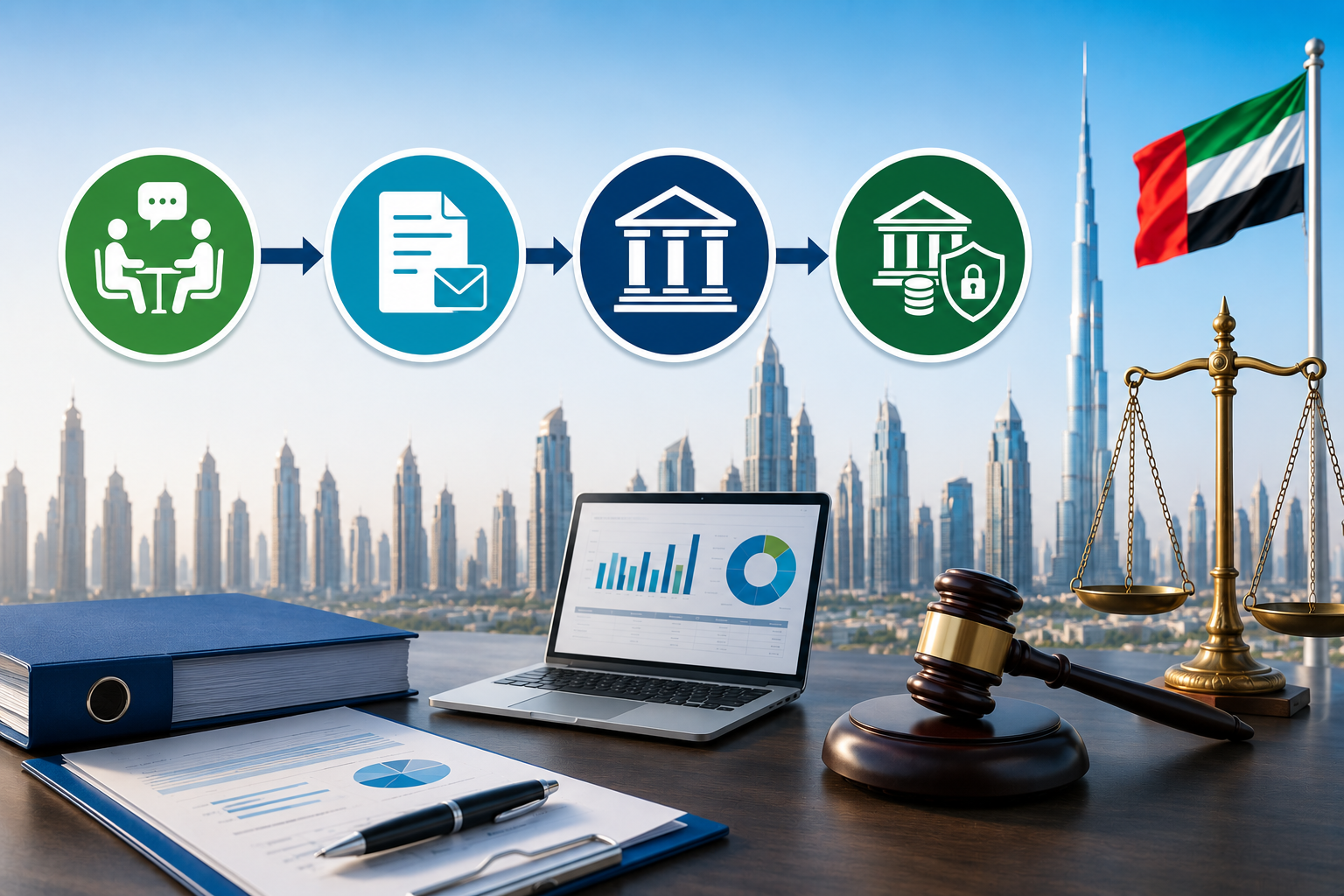
Recovering unpaid funds in the UAE doesn't have to mean heading to court immediately. The debt collection process in the UAE follows a structured path starting with negotiation and, only if that fails, escalating through formal legal channels. Whether you're a freelancer chasing a late invoice, an SME managing cash flow, or a corporate finance team handling a cross-border claim, understanding each stage helps you recover what you're owed faster and with less cost.
This guide walks through the full debt recovery process in the UAE step by step, including recent updates from the new Civil Transactions Law (effective June 2026), what each stage costs, and when it makes sense to bring in professional help.
How Debt Recovery Works in the UAE
UAE courts and legislation give creditors several clear paths to recover money owed to them, and the process is generally faster than in many other jurisdictions, particularly for undisputed debts backed by solid paperwork, like signed contracts or bounced cheques.
Recent updates from the new Civil Transactions Law (effective June 2026) have refined several procedural aspects of civil claims, including debt disputes. [Note: verify this citation points to a source specifically about the Civil Transactions Law's debt provisions; the current reference doesn't match the claim]
As a general rule, the process moves through four stages:
1. Amicable settlement
2. A formal legal notice
3. A court order or civil lawsuit
4. Enforcement, including asset seizure or a bank account freeze
Many businesses handle the first stage in-house, then bring in debt collection services in the UAE once informal efforts stall. A specialized agency understands local legal nuance, cheque law, and court procedure and can often resolve matters faster than an internal team working alone.
Steps to Recover Debt in Dubai and the UAE
Here's how the process typically unfolds, whether you're working with debt collectors in the UAE directly or through legal counsel.
Step 1: Amicable Debt Settlement
Every case should start here. Amicable debt settlement in the UAE means contacting the debtor directly by phone, email, and formal written notice to negotiate a payment plan or lump-sum settlement before involving the courts.
This stage matters more than businesses often realize: court proceedings cost time and money, and preserving the commercial relationship can be worth more than a faster judgment. A good debt collection agency in the UAE is skilled specifically at this firm enough to get results, careful enough not to burn the relationship.
Step 2: Sending a Legal Notice for Debt
If negotiation doesn't work, the next step is a formal legal notice for debt in the UAE, typically drafted by a lawyer or specialized agency. It formally demands payment within a set window (usually 15–30 days) and states that legal action will follow if the debt isn't settled.
This step isn't optional; it's a mandatory precondition before filing most civil debt cases in the UAE.
Step 3: Court Order for Debt Recovery
Once the legal notice period lapses without payment, you can file with the relevant civil court. What happens next depends on how the debt is documented:
Undisputed debts with clear supporting documents, a signed contract, an invoice with acknowledgment, or a bounced cheque can go through a fast-track payment order in the UAE court, which typically results in a judgment far faster than a full trial.
Disputed debts require a full civil lawsuit, which takes longer since the debtor can contest the claim and both sides present evidence.
A note on bounced cheques: cheque-based debt claims are among the most common and fastest recovery routes in the UAE. Recent reforms to cheque bounce law in the UAE have shifted some cases from criminal to civil proceedings, which changes both the process and the pressure available to creditors. If your debt is backed by a bounced cheque, it's worth confirming with counsel which track applies to your specific case.
Step 4: Enforcement Asset Seizure and Bank Account Freezes
A judgment is only useful if it's enforced. Once you have a court order, it goes to the Execution Court, which has real teeth: it can seize assets, impose a travel ban on the debtor, and order a bank account freeze for the debt in question to secure payment.
For claims involving companies registered in free zones, note that debt recovery in the DIFC or ADGM follows a separate, common-law-based court system with its own procedures worth flagging early if your debtor is registered in one of these zones.
Debt Recovery for Corporates vs. SMEs and Freelancers
The process is the same in principle, but the practical experience differs:
Corporates dealing with high-value or cross-border debt recovery in the UAE often need to coordinate with counsel in the debtor's home jurisdiction alongside UAE proceedings, and typically have more complex documentation (contracts, POs, delivery records) to marshal as evidence.
SMEs and freelancers more often deal with straightforward invoice disputes, where a legal notice alone resolves the majority of cases without ever reaching court.
What Does Debt Collection Cost in the UAE?
Costs vary by route:
1. Amicable collection through an agency is typically the lowest-cost option, often charged as a percentage of the amount recovered.
2. A legal notice is a relatively low fixed cost.
3. Court fees for a payment order or civil lawsuit vary by emirate and claim value, plus legal fees if you're using counsel.
4. Enforcement action (asset seizure, freezing orders) may involve additional court and execution fees.
If you're dealing with an unpaid debt in the UAE, contact our team for a free case assessment.
.avif)
Comments
No comments yet. Be the first to comment.
Leave a Comment