

Debt Recovery in Saudi Arabia: The Complete Guide to Amicable Collection, Legal Action, and When to Escalate
An unpaid invoice in Saudi Arabia rarely goes from "overdue" to "in court" in one step. There's a structured path in between, and businesses that understand the full debt collection process in Saudi Arabia and follow it deliberately recover more, faster, and at lower cost than those who either wait too long to act or escalate too quickly. This guide walks through the complete debt recovery process in Saudi Arabia from the first missed payment through to enforcement, including a genuinely current development: a major overhaul of Saudi Arabia's Enforcement Law 2026 that fundamentally changes how judgments get executed in the Kingdom.
Stage 1: Amicable Debt Recovery in Saudi Arabia
Amicable debt recovery in Saudi Arabia is the first and, by far, most common resolution route; the large majority of overdue commercial debts are recovered here, without ever reaching a courtroom. This stage typically includes direct, structured contact with the debtor by phone, email, and formal written notice; verification of the debt amount and any disputed elements; negotiation of a settlement, payment plan, or revised timeline; and clear documentation of every commitment made, since this documentation becomes important if the matter escalates.
Amicable collection works because it is faster and cheaper than litigation for both sides, and because most non-payment in a commercial context is a cash flow problem on the debtor's side rather than outright refusal to pay. A skilled, amicable collector's job is to find a resolution that gets the creditor paid without unnecessarily damaging a business relationship that may still have value.
Stage 2: Formal Demand Letter in Saudi Arabia
If amicable contact doesn't produce a resolution within a reasonable window, the next step is a formal demand letter in Saudi Arabia, a written notice, typically from a collections specialist or lawyer, that formally states the debt, the amount owed, and a deadline for payment before further action is taken.
This step matters procedurally as well as practically: under the Saudi Commercial Courts Law, certain categories of claims require the claimant to notify the defendant with a demand to pay or perform at least 15 days before filing a case. A properly issued demand letter also becomes part of the evidentiary record if the case proceeds to court, making it a critical step in any debt collection process in Saudi Arabia.
Stage 3: Commercial Court Debt Recovery in Saudi Arabia
If the debt remains unresolved after amicable efforts and formal demand, the next stage is commercial court debt recovery in Saudi Arabia. Saudi Arabia's Commercial Courts were established as specialised courts in 2017 and restructured under the Commercial Courts Law (Royal Decree M/93, in force since June 2020) to hear disputes between traders, claims under commercial contracts, and a wide range of other business-related disputes.
Key features of the current framework include specialised judges with commercial law expertise, producing more consistent outcomes in commercial disputes; electronic case filing and tracking through the Najiz platform; a payment order mechanism for clear-cut claims an acknowledged debt, a cheque, a straightforward invoice where the court is required to determine the application within 10 days; and a five-year limitation period on commercial claims, meaning that delaying legal escalation indefinitely carries the real risk of losing the right to claim entirely.
Stage 4: Judgment Enforcement Under Saudi Arabia's 2026 Enforcement Law
Winning a judgment is not the same as being paid. Turning a judgment into actual recovered funds is the job of Saudi Arabia's Enforcement Courts (Mahkamat Al-Tanfidh), operating under the Enforcement Law and the Najiz digital platform, and this is an area of genuine, current change.
In April 2026, the Saudi Cabinet approved a new Enforcement Law 2026, one of the most significant reforms to the Kingdom's civil enforcement framework in years, published in the Official Gazette on 1 May 2026 and expected to take effect on 28 October 2026. Key changes relevant to commercial creditors:
Imprisonment for financial obligations has been abolished. Enforcement in Saudi Arabia now focuses exclusively on identifying and seizing a debtor's assets and funds.
Electronic registration for enforceable commercial papers. Promissory notes and bills of exchange must be registered and issued electronically through approved platforms to carry enforceable status.
A defined 10-year limitation on execution. The right to enforce a title of obligation lapses 10 years from the date it becomes due.
A tighter list of enforceable instruments: judgments, arbitral awards, authenticated settlement agreements, and electronically registered commercial papers.
Under the current framework (still in force until the new law takes effect), the judgment enforcement process in Saudi Arabia follows this sequence: the creditor files an enforcement application with a certified copy of the judgment, the debtor is notified and given a window to settle voluntarily (currently around 20 days), and if they fail to comply, the judge can order asset seizure in Saudi Arabia, account freezing, travel bans, or sale of seized property at public auction under judicial supervision.
How to Recover an Unpaid Invoice in Saudi Arabia: A Practical Checklist
1. Confirm the invoice is accurate, complete, and was properly delivered and accepted.
2. Begin structured amicable collection promptly once the account passes its due date. Delay is the single biggest driver of lower recovery rates.
3. Escalate to a formal demand letter if amicable contact doesn't produce a committed resolution within a reasonable window.
4. If the amount and relationship justify it, prepare for commercial court filing; ensure documentation (contract, invoices, delivery proof, correspondence) is complete before filing.
5. Once judgment is obtained, move promptly to the Enforcement Court to convert the judgment into actual recovered funds. Judgment enforcement in Saudi Arabia is a separate process that requires a separate application.
6. Throughout, track the five-year limitation period on commercial claims so the right to sue is never lost through delay.
How Long Does Debt Recovery Take in Saudi Arabia?
There's no single answer; timelines depend heavily on whether the matter resolves amicably or requires court action. Amicable resolutions can often be reached within weeks. Commercial court proceedings in Saudi Arabia for straightforward, well-documented claims have become considerably faster since the 2020 reforms and ongoing digitisation through the Najiz platform, though complex or contested cases naturally take longer. The honest answer for most businesses: the earlier a genuinely non-paying account is escalated through a structured debt recovery process, the shorter the overall timeline tends to be. Drifting for months on informal follow-up before finally acting is what most often turns a fast case into a slow one.
How Sadad Manages This Process for Clients
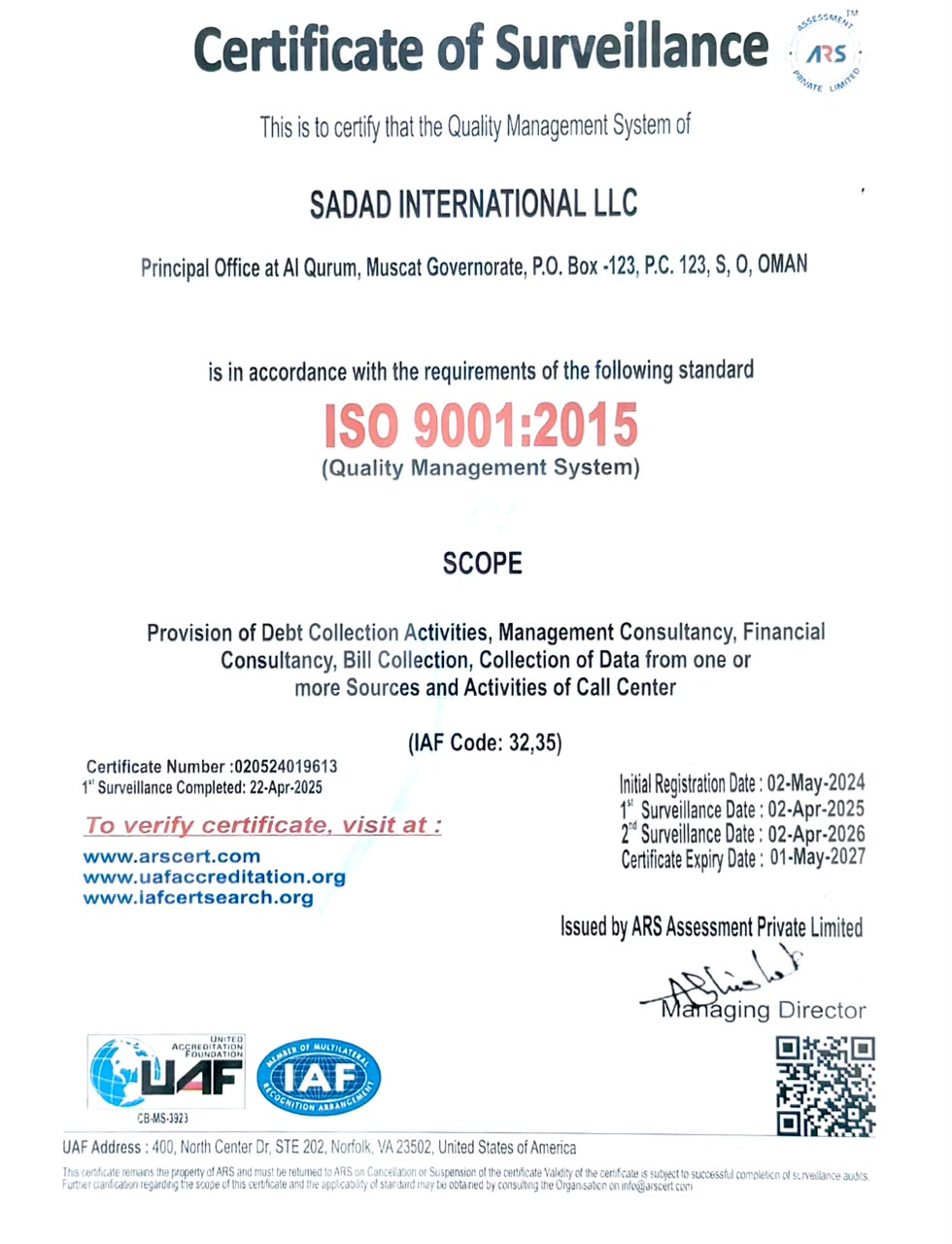
Sadad LLC runs this exact debt recovery process in Saudi Arabia from amicable collection through to legal collections for businesses across the Kingdom, so clients don't have to manage the handoff between stages themselves. For a deeper look specifically at the Commercial Courts and Enforcement Court process, see legal debt recovery in Saudi Arabia, or if you're still assessing whether it's time to escalate, read 5 signs your Saudi business needs professional debt collection services.
.avif)
Comments
No comments yet. Be the first to comment.
Leave a Comment