

Cash flow management in Saudi Arabia has become a boardroom issue, not just a finance department issue. As the Kingdom's non-oil economy expands under Vision 2030 and companies extend more trade credit to win business, the gap between "profitable on paper" and "cash in the bank" is widening for a lot of otherwise healthy companies. A business can carry a full order book and still miss payroll because too much of its revenue is sitting in unpaid invoices.
This is the essence of business financial risk in Saudi Arabia today: it rarely starts with a bad year. It starts with one overdue customer, then two, then a pattern that quietly eats into working capital until a liquidity crunch forces uncomfortable decisions, delaying supplier payments, drawing down credit lines, or turning away good new orders because there's no cash to fund them.
The good news is that this risk is manageable, and it's manageable in a structured, three-stage way: credit evaluation before you extend terms, receivables management while the invoice is live, and debt recovery when a payment goes seriously overdue. Businesses that treat these as one connected system, rather than three unrelated problems, are the ones that protect their cash flow in Saudi Arabia most effectively.
Why is Cash Flow Risk Rising for Saudi Businesses?
The Three Lines of Defence: Credit Evaluation, Receivables Management, and Debt Recovery
1. Credit Evaluation Services in Saudi Arabia: Preventing Bad Debt Before It Starts
The cheapest debt to recover is the one you never had to chase, because you never extended credit to a customer who couldn't pay in the first place. Credit evaluation services in Saudi Arabia typically combine a SIMAH credit bureau report Saudi Arabia's licensed national credit information company to establish a factual baseline on a prospective customer's credit history and reported obligations, alongside Commercial Registration (CR) verification to confirm the legal standing and ownership structure of the business, trade reference checks and payment behaviour analysis specific to the customer's sector, and a recommended credit limit and payment terms based on the combined risk picture.
This is the foundation of bad debt prevention in KSA: a short credit check before signing a new account can save weeks of collection effort later. We go deeper into how this works in our guide to credit evaluation for SMEs in Saudi Arabia and our dedicated piece on understanding SIMAH and credit risk assessment.
2. Receivables Management in Saudi Arabia: Reducing DSO While the Invoice Is Still Live
Once credit is extended, the job shifts to keeping accounts receivable in KSA moving through the payment cycle as fast as possible. This is receivables management, the proactive, day-to-day discipline of invoice tracking, structured payment reminders, ageing analysis, and early intervention on slow-paying accounts, all aimed at one metric: Days Sales Outstanding (DSO).
Every extra day an invoice sits unpaid is a day that cash is unavailable. A structured receivables management process in Saudi Arabia, often outsourced to a specialist partner, typically delivers measurable DSO reduction within the first few billing cycles. For a full breakdown of the tactics involved, see our guide on how to reduce DSO in Saudi Arabia, and if you're weighing whether this function belongs in-house or outsourced, read receivables management vs. debt collection in Saudi Arabia.
3. Debt Recovery and Legal Debt Collection in Saudi Arabia: When an Account Is Seriously Overdue
Even with strong credit evaluation and disciplined receivables management, some accounts will still go bad. This is where debt recovery in Saudi Arabia comes in, typically progressing through amicable collection first, and escalating to legal debt collection through formal demand, Commercial Court proceedings, or the Enforcement Court only when direct engagement fails. The Saudi Enforcement Law 2026 reforms are reshaping how quickly and effectively judgments can be executed, changing the cost-benefit calculation for businesses considering formal legal escalation.
The full mechanics of this escalation path are covered in our complete guide to debt recovery in Saudi Arabia and our deeper look at legal debt recovery and Commercial Courts in Saudi Arabia.
Steps to Reduce Bad Debt in Saudi Arabia
How to Improve Cash Flow in a KSA Business: A Practical Framework
When to Outsource Receivables Management or Debt Recovery in Saudi Arabia
How Sadad Supports Saudi Businesses End-to-End
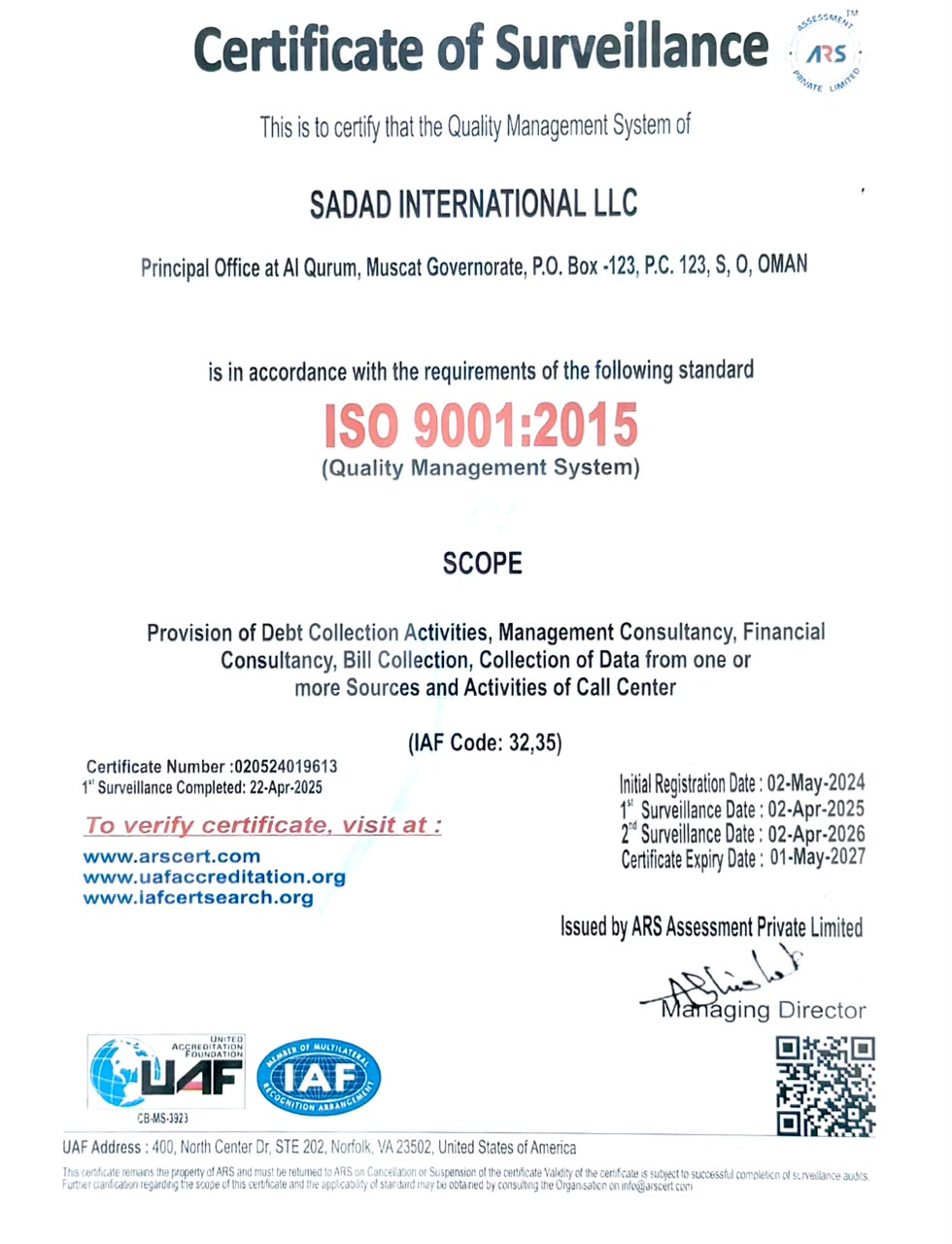
Sadad LLC, backed by the Bahwan Group and operating across Oman, the UAE, Bahrain, and the Kingdom, provides all three layers described above under one roof: credit evaluation, receivables management, and debt collection and legal collections, backed by an ISO 9001:2015-certified process. For a walkthrough of how these pieces come together in practice, see how Sadad manages the full debt recovery cycle for Saudi businesses, or get in touch to talk through your specific cash flow management and debt recovery position.
This article is provided for general informational purposes and does not constitute legal or financial advice. For guidance specific to your business, consult a qualified professional or contact our team directly.
.avif)
Comments
No comments yet. Be the first to comment.
Leave a Comment